Renovation & Extension · Richmond · Inner Melbourne
Richmond
Terrace
A heritage Victorian terrace sensitively extended and transformed — preserving the character of the street while unlocking a thoroughly contemporary way of living inside.
Location
Richmond, VIC
Type
Renovation & Extension
Storeys
Double Storey
Configuration
3 Bed · 2 Bath
Services
Design · Build · Interiors
The Brief
The brief was for a Victorian terrace with — more light, more space, a kitchen suited to real cooking and entertaining, and an outdoor area that felt like a genuine extension of the house rather than an afterthought. The original Victorian facade was non-negotiable: the intervention had to read as contemporary without unsettling the heritage character of the streetscape.
The Outcome
A double-height rear extension with full-width glazing transformed the back of the terrace into a generous open-plan kitchen, dining and living zone that pours out to a landscaped courtyard and outdoor dining terrace. The original facade was restored and the front rooms reconfigured for a quieter, more private function. Wednesday Projects works as a team, from planning feasibility to interiors and landscaping — for a result that is coherent from the streetscape through to the garden wall.
The Facade
Heritage preserved, character strengthened
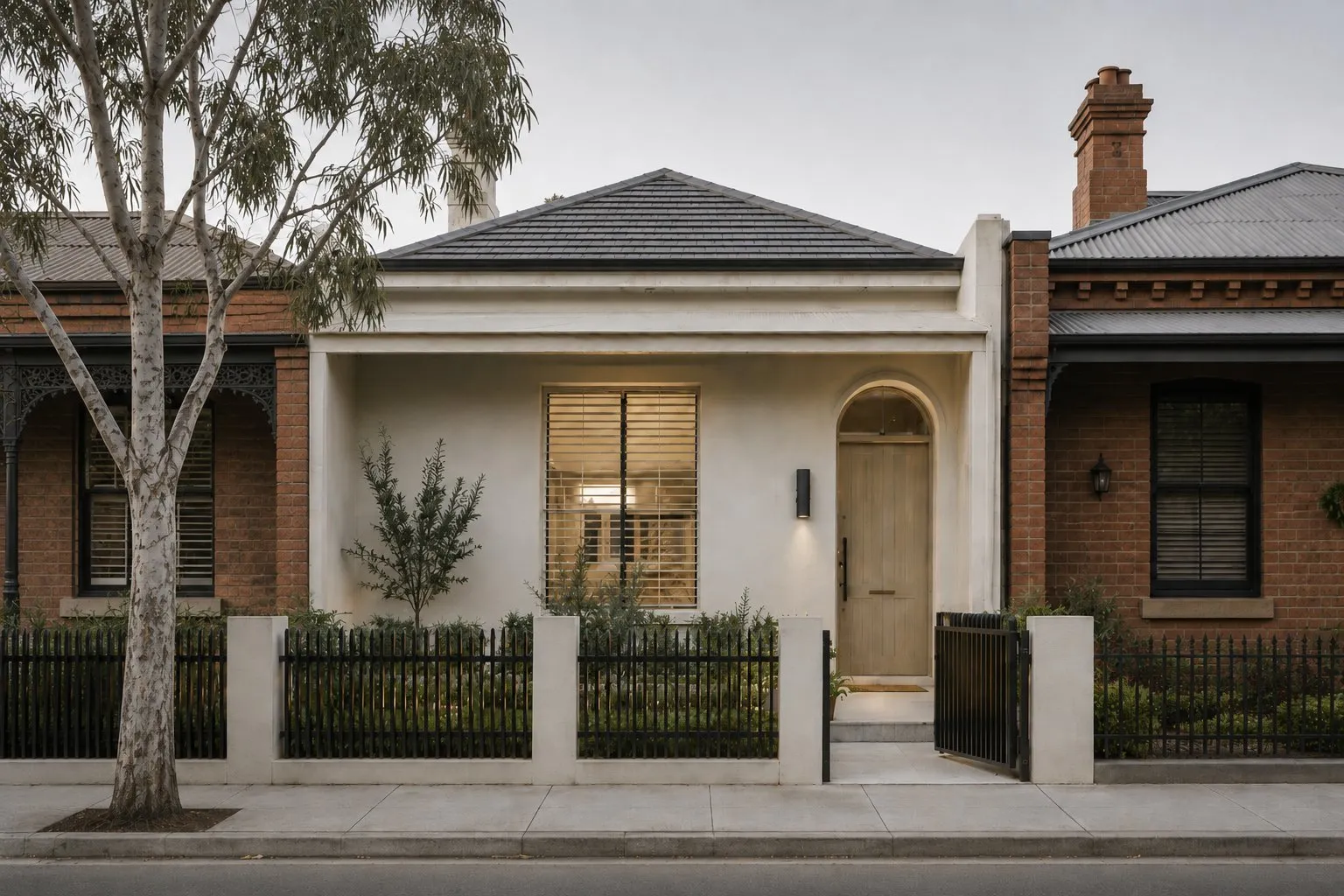
The street presence of the original Victorian terrace was restored and refined rather than concealed or contrasted. Render was repaired and upgraded, the arched entry restored, and the front garden replanted with a considered palette of species that complement the limestone fence piers and wrought iron gate without competing with the architecture.
The louvred timber screen to the front window provides privacy from the street while drawing filtered natural light into the sitting room beyond — a detail that reads as quietly purposeful rather than conspicuously designed. The result is a home that holds its place in the streetscape with confidence.
Dining & Staircase
Volume, light and vertical movement through the heart of the home
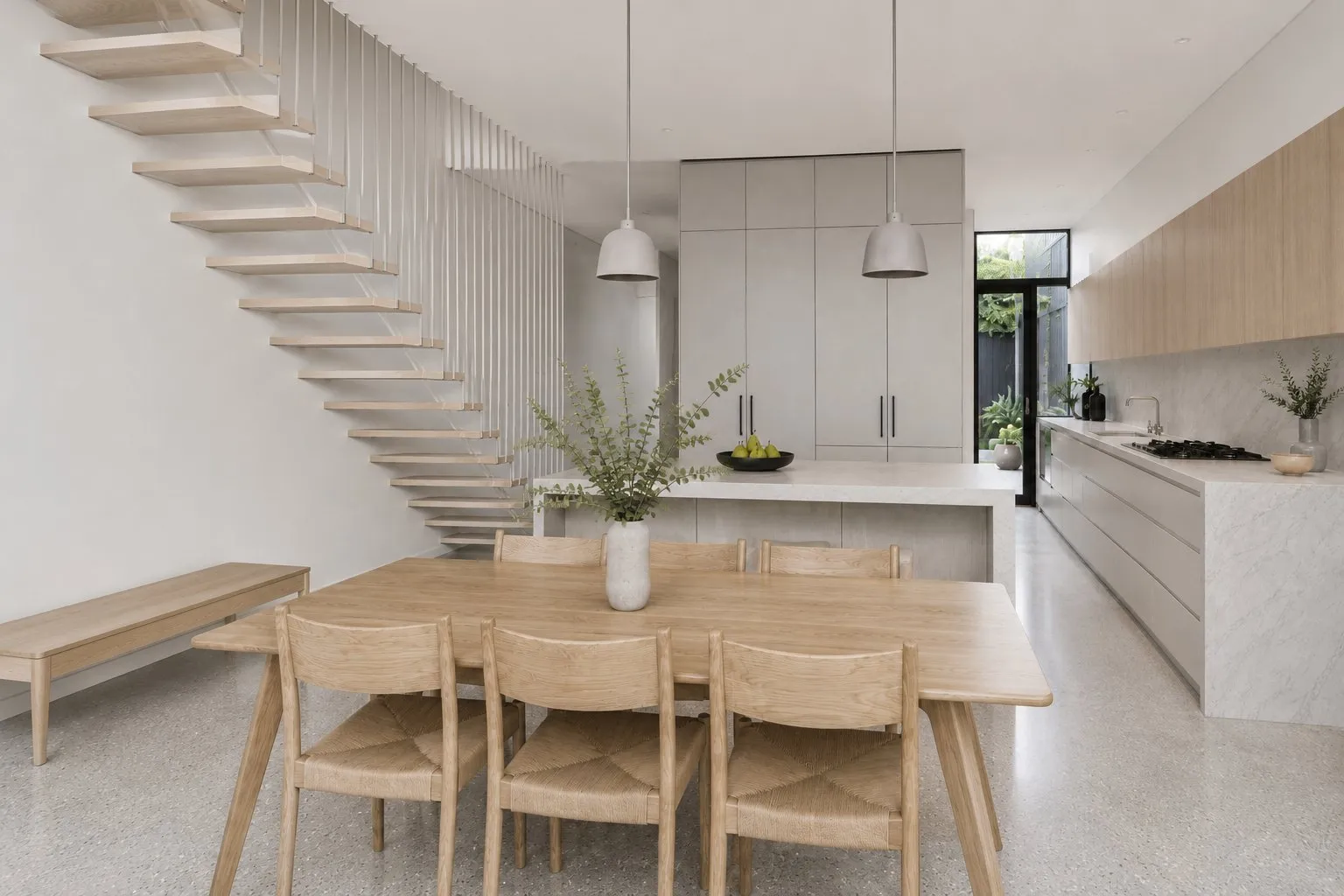
The dining zone sits at the junction of the old and new — beneath a double-height void that draws light from high clerestory glazing and connects the ground and upper levels without closing them off from each other. The floating staircase, with its open timber treads and slender steel balustrade, is both a circulation element and a centrepiece: visible from the kitchen, the dining table, and the garden beyond.
Terrazzo flooring runs continuously from the kitchen through to the dining area, grounding the space with a material that is generous in scale and effortless in maintenance — well suited to a household that uses the space hard.
Kitchen
A working kitchen that holds its quality in daily use
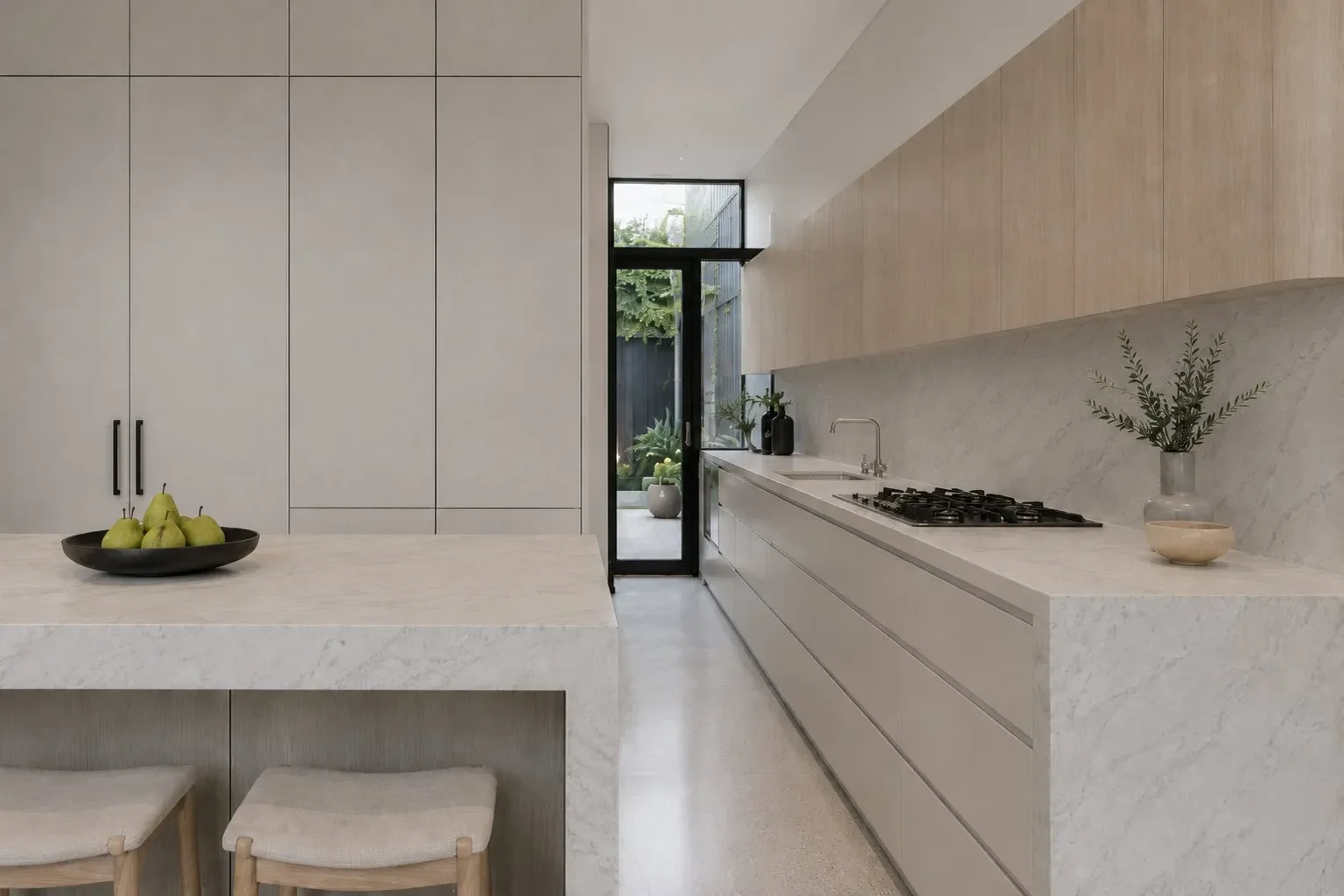
The kitchen runs the full length of the extension — a generous galley arrangement with a stone-topped island that provides a second work surface and an informal gathering point for the household. The material palette brings together marble benchtops with pronounced veining, flat-panel cabinetry in a warm linen tone, and upper cabinets in a complementary oak veneer that lightens the north wall.
Every element is specified in full at the design stage — joinery dimensions, appliance selection, tap position, lighting layout. That level of pre-resolution is what allows a kitchen of this quality to come together without cost surprises or on-site improvisation.
Living Room
Full-height glazing that brings the garden into the room
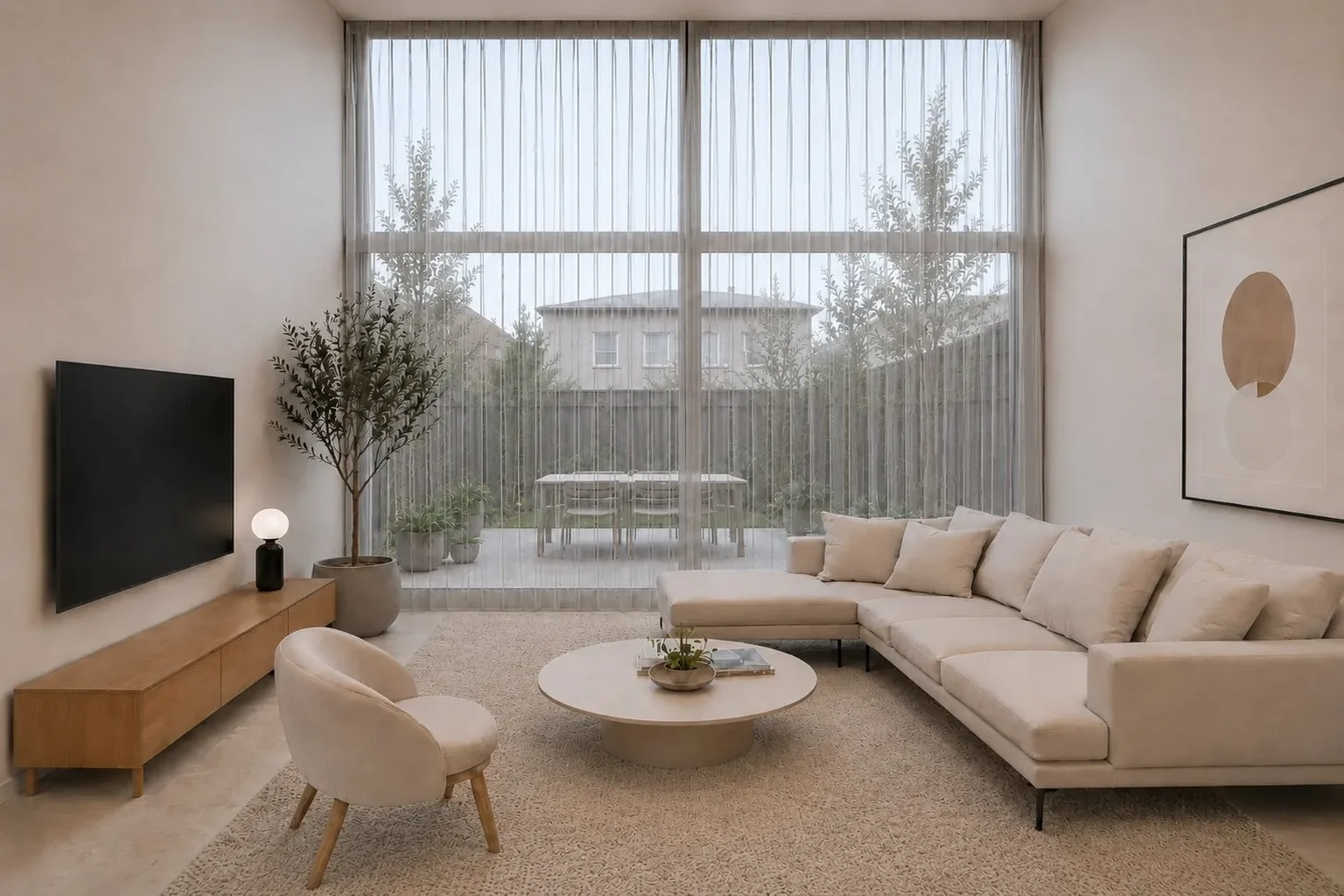
The living zone is anchored by a wall of floor-to-ceiling glazing that frames the landscaped courtyard as a continuous backdrop. Sheer linen screening diffuses direct afternoon light while preserving the sense of spatial connection — a considered balance between openness and comfort that works differently across each season.
The double height of the extension gives the living space a quality of volume that is rare in inner-city terrace renovations. Warm plaster walls, a low-profile sectional sofa, and a restrained furniture selection allow the space to breathe — the architecture does the work, not the objects within it.
Ensuite
A light well that turns a bathroom into a sanctuary
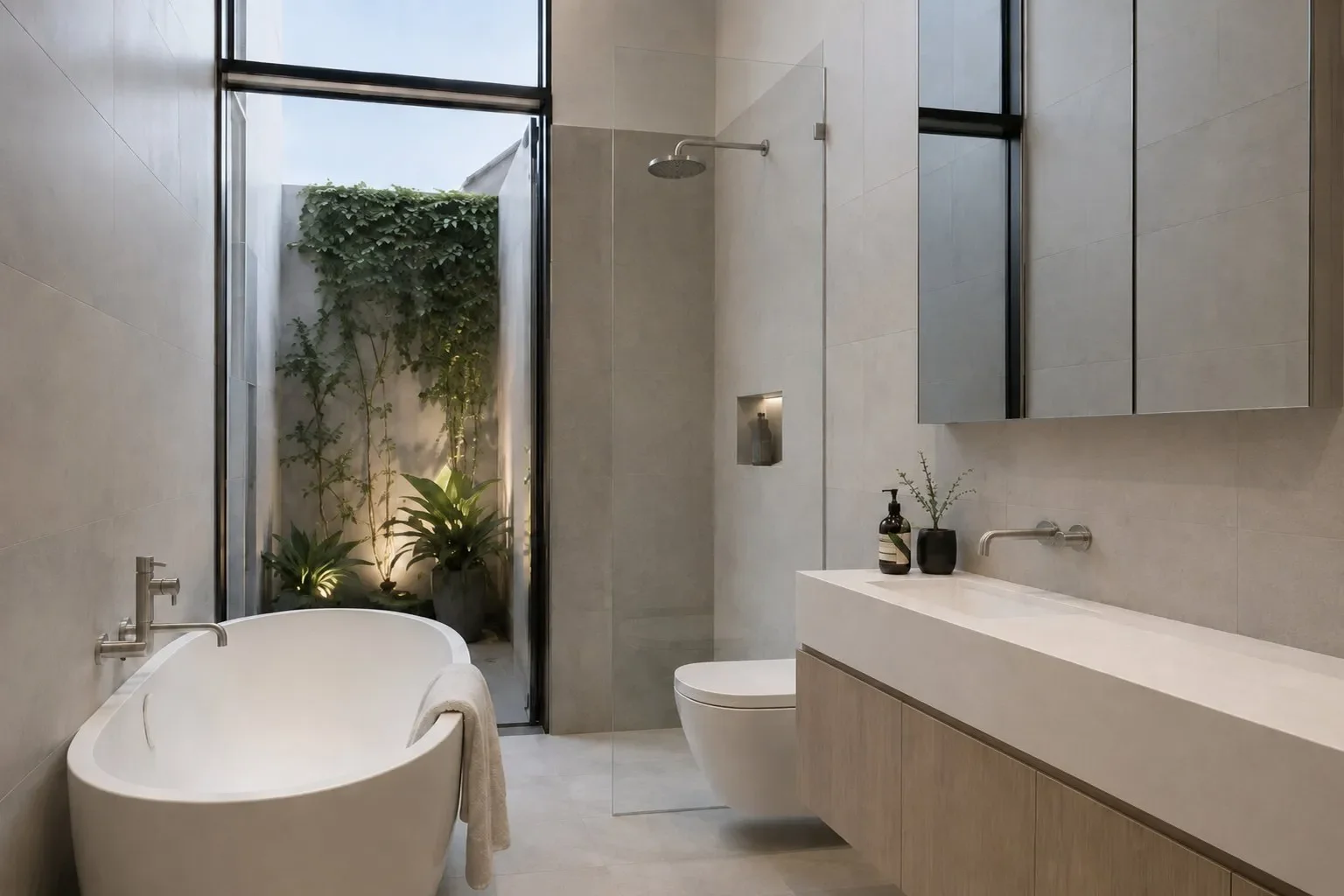
The main ensuite is positioned to borrow light from a narrow planting court — a private light well visible through full-height glazing that brings natural light and a sense of the outdoors into a space that might otherwise read as internal. The freestanding bath is positioned to face the court directly, making it the focal point of the room without requiring any decorative gesture.
Honed stone tiles to floor and walls, a floating timber vanity, and recessed storage behind mirror panels give the bathroom a quiet authority. Wall-mounted tapware in brushed steel and a concealed toilet suite complete a specification that is resolved without being elaborate — the hallmark of a bathroom designed to last and look better with time, not less.
Project Complexity
Challenges
Heritage Overlay
The property sits within a Heritage Overlay in the City of Yarra. Every element of the rear extension — height, setback, materiality, glazing proportion — was developed in parallel with the planning strategy to achieve a contemporary result within the constraints of the overlay, without compromise.
Double-Height Structural Insert
The double-height rear extension required careful structural engineering to achieve the span of glazing without intermediate columns. The engineering solution was integrated into the architectural design from the concept stage — not resolved on site — ensuring the glazed wall is resolved exactly as drawn.
Terrace Site Constraints
Working within a narrow inner-city terrace lot — shared walls on both sides, limited site access, overlooking requirements, and existing services running through the slab — demands experienced site management and a construction methodology planned well in advance.
Start a Conversation
Considering a renovation or extension in inner Melbourne?
We work with clients across Richmond, Fitzroy, Collingwood, South Yarra and Melbourne's broader inner suburbs — from planning strategy and design through to interiors and landscaping.
Begin Your Enquiry